
Florida · In-building cellular
Commercial Cellular DAS & Signal Boosters — Florida
We design and install multi-carrier cellular DAS, repeater and amplifier systems for commercial buildings across Florida — hotels, hospitals, distribution facilities and offices, from 5,000 sq ft to over a million.
FCC-approved products Manufacturer-certified technicians AT&T, Verizon & T-Mobile
Request a quote
Tell us about the building. We’ll come back with what it would take to fix the coverage.
"*" indicates required fields
Seamless Cellular is a manufacturer-certified cellular DAS integrator serving Florida, with completed installations at Florida Memorial University and for the City of Marathon in the Keys. We design and install multi-carrier systems supporting AT&T, Verizon and T-Mobile in buildings from 5,000 to over 1,000,000 square feet. All products are FCC-approved and all installation technicians are manufacturer-certified.
The Florida problem
Why do Florida buildings block cellular signal?
Florida has some of the best outdoor coverage in the country. AT&T reaches 98.95% of the state on 4G LTE and Verizon 96.27%, helped by the flattest terrain in the United States — signals travel further here than almost anywhere.
Then Florida builds specifically to keep things out.
The Florida Building Code exists because of hurricanes, and it works. In the High-Velocity Hurricane Zone covering Miami-Dade and Broward, structures are engineered for wind speeds up to 175 mph for ordinary occupancy, and impact-rated glazing is tested to standards most of the country never encounters. The result is reinforced concrete, concrete block and laminated impact glass in enormous quantity. Every one of those choices is correct for survival and hostile to radio frequency. Florida does not have a coverage problem. It has a building envelope designed, deliberately, to resist penetration.
Signal loss through common building materials
Low-E glass alone blocks roughly 99.9% of the signal reaching it. Put several of these materials in series, as every multi-storey plant and hospital does, and a strong outdoor signal becomes no usable service two rooms in.
Hurricane-rated construction
Reinforced concrete, concrete block and laminated impact glass are standard, not premium. Six inches of concrete costs 10 to 19 dB and treated glazing 30 to 34 dB, so a code-compliant Florida building attenuates far harder than an equivalent structure further north.
Hospitality and high-occupancy venues
Hotels, resorts, convention space and attractions concentrate thousands of people into dense construction. Coverage that is adequate on a quiet morning fails completely at check-in or at the end of an event — a capacity problem rather than a coverage one.
Coastal and island sites
In the Keys and along stretches of coast, tower density is genuinely low and water gaps break line of sight. Verizon’s 5G in the Keys is limited to a few pockets around Key West. There the donor signal has to be found before anything can be distributed indoors.
- Florida cities served
- Jacksonville, Miami, Orlando, Tampa, St. Petersburg, Fort Lauderdale, Tallahassee, Cape Coral, Marathon & statewide
- Carriers supported
- AT&T, Verizon and T-Mobile — multi-carrier systems
- Building sizes
- 5,000 to over 1,000,000 sq ft
- Common verticals
- Hospitality and resorts, healthcare, logistics and distribution, education, municipal
- Credentials
- FCC-approved products; manufacturer-certified installation technicians
- Coverage
- Manufacturer-certified installers serving Florida
- Also available
- C-band 5G systems, upgrades to discontinued amplifiers, and remote monitoring for single and multi-site estates
Statewide
Cities we serve in Florida
Florida is several distinct markets stacked into one state — South Florida’s high-rise hurricane construction, the Orlando hospitality corridor, the Tampa and Jacksonville logistics economies, and the coastal and island communities where tower density is genuinely thin.
Jacksonville
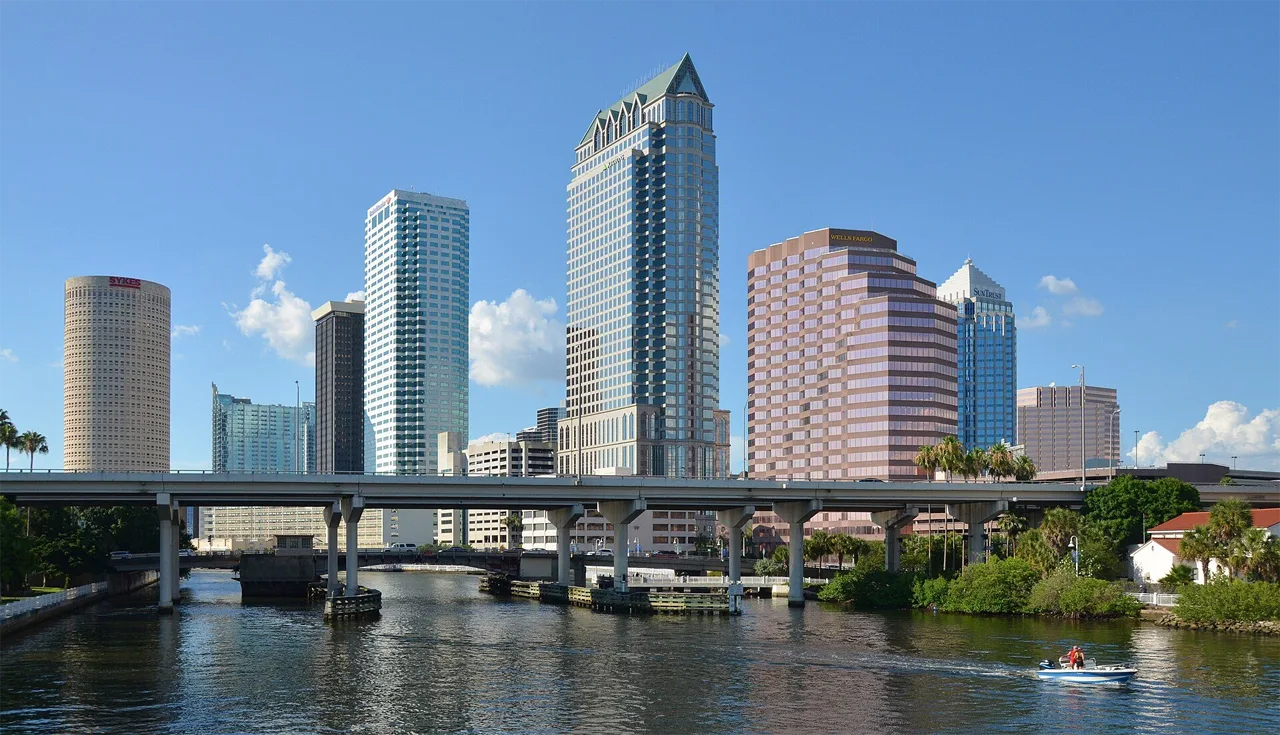
The largest city by area in the contiguous United States, with a logistics and distribution economy around the port and enormous metal-clad warehouse floors where signal dies a few bays from the wall.
Miami
High-Velocity Hurricane Zone construction at its most stringent — reinforced concrete towers with impact-rated glazing engineered for 175 mph winds. Superb at keeping storms out, and equally effective against cellular signal.
Orlando
The hospitality and convention capital of the state. Hotels, resorts and exhibition halls concentrate thousands of people into dense construction, and demand spikes hard rather than running evenly.
Tampa
Healthcare campuses, port logistics and a growing downtown office market, combining hurricane-rated envelopes with the deep floorplates typical of modern commercial construction.
St. Petersburg
Waterfront commercial and healthcare buildings where marine air is hard on rooftop equipment as well as on the structures themselves.
Hialeah
One of the densest industrial and light manufacturing areas in South Florida, largely concrete block construction built to Miami-Dade standards.
Tallahassee
State government buildings and university campuses in the Panhandle — institutional concrete with deep interior corridors, and a different carrier footprint from South Florida.
Fort Lauderdale
High-rise hospitality, marine industry and Broward County HVHZ construction rated to 170 mph for ordinary occupancy.
Port St. Lucie
Fast-growing residential and commercial development on the Treasure Coast, almost entirely modern code-compliant concrete construction.
Cape Coral
Southwest Florida commercial and healthcare buildings, in a region where tower density thins noticeably away from the immediate coast.
We have worked at both ends of that range, from Florida Memorial University in Miami Gardens to the City of Marathon in the Keys, and we survey statewide. If your building is in Florida, we can assess it.
Verticals
Industries we serve in Florida
Hospitality & resorts
Florida’s largest commercial building type and its hardest connectivity problem. Hotels and resorts combine concrete floor slabs between guest rooms, long interior corridors and occupancy that swings from quiet to capacity within an hour. Guests now judge a property on whether their phone works in the room.
Hospitality DASHealthcare
Florida’s hospital systems serve an unusually large older population, and their buildings use the same dense concrete and shielded imaging suites as anywhere — with hurricane-rated envelopes on top. Clinical staff end up furthest from signal precisely where reliable communication matters most.
Healthcare DASEducation & public institutions
We installed at Florida Memorial University and for the City of Marathon. Campus and municipal buildings combine older construction with high user density, and in Florida they double as shelters — which makes indoor coverage a public safety consideration, not just a convenience.
Education DASProof
Our work in Florida
Our named Florida work includes Florida Memorial University in Miami Gardens and the City of Marathon in the Keys. We have also installed nationwide for Hilton, Marriott, DoubleTree, Starbucks and FedEx — whose systems we installed across major distribution hubs nationwide — alongside work for federal agencies. All products are FCC-approved and every installation technician is manufacturer-certified.
In Florida: Florida Memorial University and the City of Marathon. See more client references →
Process
How a DAS installation works in Florida
Site survey
We measure actual signal strength by carrier throughout your building and identify usable donor signal. In coastal and island locations, and inside hurricane-rated envelopes, that measurement often surprises people.
System design
We size the system to your square footage, construction and carrier requirements — a repeater system under 20,000 sq ft, a full DAS above it.
Carrier coordination
Multi-carrier systems require carrier approval. We handle it.
Installation
Manufacturer-certified technicians, working to your site’s safety requirements.
Verify & support
We test coverage throughout the building before we leave, and support the system afterwards.
Also available
5G, system upgrades and remote monitoring in Florida
5G in Florida: a very wide carrier gap
Amplifiers work on frequency, not on the name of the technology. Low-band 5G runs on the same 600, 700, 850 and 1900 MHz frequencies as LTE, so a multi-band system carries it. Florida has one of the widest carrier splits in the country: T-Mobile reaches 80.29% on 5G, AT&T 54.66% and Verizon just 24.64% — while AT&T leads 4G LTE at 98.95%.
That gap makes multi-carrier design non-negotiable here. A hotel whose guests arrive on all three networks, or a hospital whose staff and patients do, cannot be served by a single-carrier system.
Dedicated mid-band is the separate question. C-band runs at 3.7–3.98 GHz and sits outside the frequencies standard FCC-certified boosters are authorised to carry, as does 2.5 GHz. Verizon holds 140–200 MHz of C-band in every available market, AT&T about 120 MHz, T-Mobile about 40 MHz. It is the spectrum carrying real throughput, and in Florida the demand comes from convention centres, resort properties and distribution floors where hundreds of devices compete at once. A purpose-built C-band system runs alongside a multi-band install rather than replacing it.
Upgrading amplifiers in Florida’s older commercial stock
A system that worked five years ago can be underperforming now with nothing broken:
- The 3G shutdowns. AT&T switched off 3G on 22 February 2022; Verizon and T-Mobile followed on 31 December 2022. Equipment specified around those networks lost what it was tuned for.
- Missing bands. Older five-band units never covered 600 MHz Band 71, now core T-Mobile low-band territory — significant in a state where T-Mobile’s 5G lead is this large — and many never covered Band 14 for FirstNet.
- Pre-2014 certification. FCC Part 20 requires oscillation detection, automatic gain control and power-down near a cell site. Older units predate that standard, and operating a booster without valid FCC certification is not lawful.
Florida adds two complications of its own. Salt air and humidity are hard on rooftop donor antennas, connectors and coaxial runs, so a system can degrade physically as well as technologically. And hurricane seasons take their toll: equipment that survived a storm is not necessarily performing as designed afterwards, and nobody tends to check until someone complains.
We survey what is installed and tell you what is salvageable. Cable runs and mounting frequently survive — and those are most of the labour — so replacing the head-end and adding the missing bands typically costs a fraction of a new system. Where corrosion has taken the outdoor components, we will say so plainly.
Monitoring hotel groups, hospital networks and multi-site estates
Most coverage failures are found by a complaint, weeks after they start. Monitored systems report status continuously, so a fault becomes a notification rather than a discovery.
In Florida that matters most to operators running many buildings. A hotel group with properties in Orlando, Miami and Tampa has no RF specialist at any of them, and a dead zone on the fourth floor of one property surfaces as a bad review rather than a ticket. The same is true of a hospital network, a retail chain, a distribution operator or a venue group.
We have installed across national footprints before — FedEx systems in major distribution hubs nationwide — and at that scale the operational problem is never one building. It is knowing which of forty is degraded this week. On supported hardware we can read status remotely and often diagnose, reset a unit or adjust bands without sending anyone to the Keys or the Panhandle.
There is a Florida-specific reason to want it, too: after a storm, monitoring tells you which sites came back and which did not, without waiting for someone to drive there.
Monitoring needs a connection at install — Ethernet or a cellular modem — so it is far cheaper to specify up front than to retrofit across an estate.
Questions
Florida DAS & signal booster FAQ
Because Florida builds to keep the weather out, and radio waves go the same way. AT&T covers 98.95% of the state on 4G LTE and the flat terrain helps signals travel, so outdoors is rarely the issue. Inside is another matter: the Florida Building Code drives reinforced concrete, concrete block and laminated impact glazing, and in the High-Velocity Hurricane Zone across Miami-Dade and Broward those standards are stricter again. Six inches of concrete costs 10 to 19 dB and treated glass 30 to 34 dB. Stack them and a strong outdoor signal becomes nothing at a desk.
Square footage is the usual dividing line — under about 20,000 sq ft a commercial repeater system is normally sufficient, above that a DAS — but hospitality is the case where capacity matters as much as area. A property can have adequate coverage at 9am and none at check-in, because hundreds of guests arrive at once and a repeater system sized for coverage has no headroom for simultaneous users. For a full-service hotel or any property with conference space, plan on a DAS.
Yes, and in Florida it is essential rather than preferable. The carriers diverge more here than almost anywhere: T-Mobile reaches 80.29% on 5G against Verizon’s 24.64%, while AT&T leads 4G LTE at 98.95%. For a hotel, hospital or venue where the people in the building are on all three networks and you have no control over which, a single-carrier system leaves a large share of them without service.
Often, but the design starts differently. Tower density along the Keys is genuinely low — Verizon’s 5G there is limited to a few pockets around Key West — and water gaps break line of sight, so the first job is establishing what donor signal reaches the site and at what height. We have worked in the Keys, for the City of Marathon. Where usable signal exists, a repositioned or taller donor antenna usually captures it; where it does not, no repeater can manufacture one, and we will tell you that at survey.
For voice and ordinary data, a well-designed multi-band system already carries low-band 5G, because it runs on the same 600 to 1900 MHz frequencies as LTE. Where 4G stops being enough is throughput under load: a convention floor with two thousand delegates, a hospital running point-of-care imaging and real-time monitoring, or a distribution building where hundreds of scanners and sensors compete. That needs mid-band capacity, and C-band at 3.7–3.98 GHz is outside standard booster certification, so it requires a dedicated system running alongside the multi-band install.
Usually, and the survey establishes whether the problem is physical or technological. Physically, salt air and humidity attack rooftop donor antennas, connectors and cable ends, and storm damage is not always visible from inside. Technologically, the equipment may simply have aged out: 3G was switched off in 2022, older five-band units never covered 600 MHz Band 71, and pre-2014 units lack the oscillation detection and automatic gain control that FCC certification now requires. We survey both, tell you what is salvageable — cabling and mounting often are — and quote on replacing only what needs it.
Get a free cellular distributed antenna system installation quote for your Florida building
Tell us the address, the square footage and what your coverage is like now. We’ll tell you what it would take to fix it.