
Colorado · In-building cellular
Cellular DAS Installation in Colorado
We design and install multi-carrier cellular DAS, repeater and amplifier systems for commercial buildings across Colorado — from 5,000 sq ft offices to facilities over a million square feet.
FCC-approved products Manufacturer-certified technicians AT&T, Verizon & T-Mobile
Request a quote
Tell us about the building. We’ll come back with what it would take to fix the coverage.
"*" indicates required fields
Seamless Cellular is a manufacturer-certified cellular DAS integrator serving Colorado, designing and installing multi-carrier systems that support AT&T, Verizon and T-Mobile in commercial buildings from 5,000 to over 1,000,000 square feet. All products are FCC-approved and all installation technicians are manufacturer-certified. Colorado is one of the states where outdoor coverage cannot be assumed, so every design starts with measuring the donor signal available at the building rather than the building alone.
The Colorado problem
Why do Colorado buildings lose cellular signal?
Colorado is the exception to a rule we apply almost everywhere else. In most states the signal is strong outdoors and the building is the whole problem. Here, coverage by land area runs to about 77.8% for Verizon and 76.8% for AT&T on 4G LTE, with T-Mobile at roughly 41% — and 5G is thinner still.
In Colorado the building and the terrain are both the problem.
Those percentages are a measure of land area, and Colorado has a great deal of land where nobody lives. Denver, Boulder and the Front Range corridor have strong service. But move into the mountains, the Western Slope or the eastern plains and the outdoor donor signal a repeater depends on may simply not be there at usable strength. That changes the order of work: we establish what signal reaches the roof before designing anything to distribute indoors, because a system cannot amplify what never arrives.
Signal loss through common building materials
Low-E glass alone blocks roughly 99.9% of the signal reaching it. Put several of these materials in series, as every multi-storey plant and hospital does, and a strong outdoor signal becomes no usable service two rooms in.
Front Range concrete and glass
Denver, Boulder and Colorado Springs have built hard and fast in poured concrete with energy-efficient glazing. Low-E glass costs 30 to 34 dB on its own, so the newest and best-performing buildings are frequently the worst for indoor signal.
Terrain shadowing
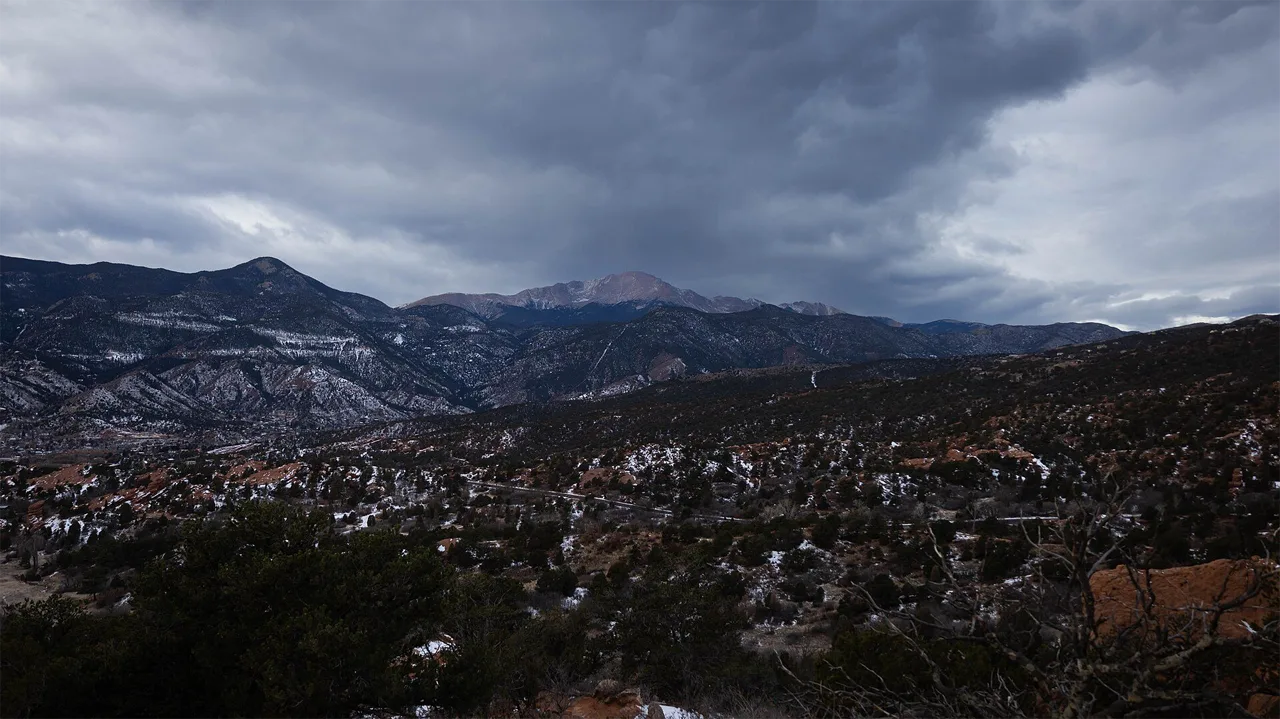
Ridges, canyons and valley floors block line of sight to the tower long before the signal reaches the wall. A building in a valley can have no usable donor signal at ground level while a rooftop antenna twenty feet higher finds one.
Resort, lodging and event properties
Mountain hotels, conference centres and event venues combine dense construction, deep interior corridors and sharp occupancy peaks. Coverage that holds on a quiet Tuesday collapses when a thousand guests arrive at once — a capacity problem, not a coverage one.
- Colorado cities served
- Denver, Colorado Springs, Aurora, Fort Collins, Lakewood, Boulder, Thornton, Pueblo & statewide
- Carriers supported
- AT&T, Verizon and T-Mobile — multi-carrier systems
- Building sizes
- 5,000 to over 1,000,000 sq ft
- Common verticals
- Corporate, hospitality and resorts, healthcare, manufacturing, government
- Credentials
- FCC-approved products; manufacturer-certified installation technicians
- Coverage
- Manufacturer-certified installers serving Colorado
- Also available
- C-band 5G systems, upgrades to discontinued amplifiers, and remote monitoring for single and multi-site estates
Statewide
Cities we serve in Colorado
Colorado splits cleanly into the Front Range urban corridor, the mountain resort economy and the industrial and agricultural east. The RF problem is different in each, and so is the design.
Denver
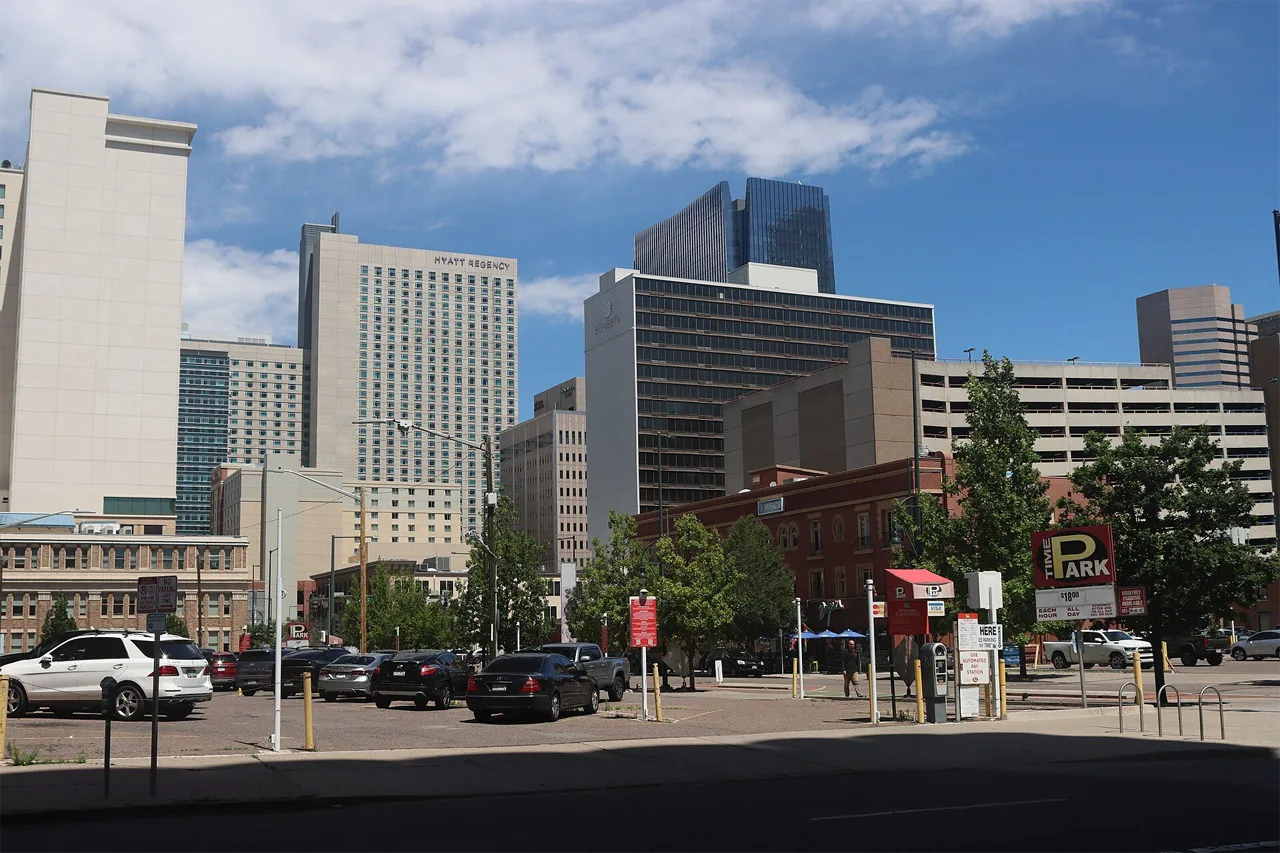
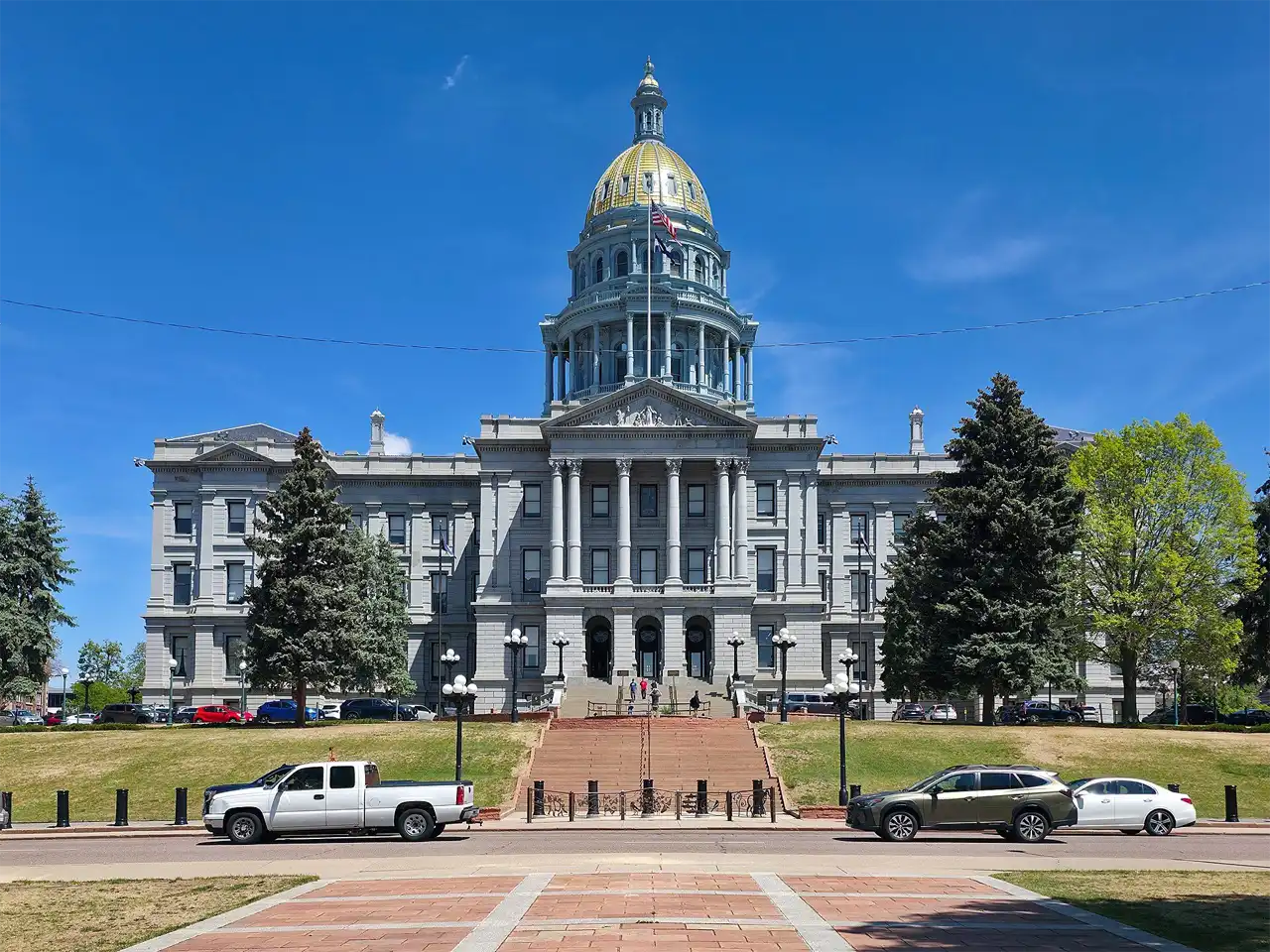
Downtown towers and the LoDo warehouse conversions, plus a fast-growing medical district. Modern curtain wall over concrete frames is the dominant construction, and it is close to the worst case for cellular signal.
Colorado Springs
Defence, aerospace and technology employers in low-rise concrete campuses, alongside hotel and conference properties serving visitors to the region.
Aurora
Large healthcare campuses and distribution facilities east of Denver, where deep floorplates put people a long way from any exterior wall.
Fort Collins
University buildings and technology manufacturing in the northern Front Range, a mix of mid-century masonry and modern energy-efficient construction.
Lakewood
Federal and commercial office space west of Denver, much of it institutional concrete from an era when RF penetration was nobody’s design criterion.
Thornton
Light industrial and distribution buildings along the northern corridor — metal-clad structures with long spans and few openings.
Arvada
Suburban commercial and light manufacturing, with a growing base of mid-size industrial buildings that were never designed around indoor connectivity.
Westminster
Office parks and retail centres between Denver and Boulder, mostly 1980s and 1990s concrete-frame construction.
Pueblo
Steel and heavy industry in southern Colorado, where structural steel and the distance from dense cell infrastructure compound each other.
Boulder
Research facilities, laboratories and technology offices. Shielded lab space and high-performance glazing both block signal, and the terrain begins to matter here as the foothills rise.
We survey statewide, including mountain and Western Slope properties where the donor signal is the first question rather than the last. If your building is in Colorado, we can assess it — and if no usable signal reaches it at any height, we will tell you that at survey rather than after installation.
Verticals
Industries we serve in Colorado
Corporate & commercial real estate
The Front Range office market is largely modern construction: poured concrete frames behind energy-efficient curtain wall, which is close to worst case for cellular. Tenants now treat indoor coverage as a lease condition rather than an amenity.
Property management DASHospitality & resorts
Hotels, lodges and conference properties across the mountains and the Front Range face two problems at once: heavy construction between guest rooms and corridors, and demand that spikes hard during events and ski season.
Hospitality DASHealthcare
Colorado’s hospital campuses use the same dense concrete and shielded imaging construction as anywhere else, with the added complication that some sit in terrain where the donor signal needs finding before it can be distributed.
Healthcare DASProof
Our work in Colorado
We do not publish named Colorado projects. Seamless Cellular has installed nationwide since 2017 for organisations including Bank of America, Hilton, Marriott, Starbucks and FedEx — whose systems we installed across major distribution hubs nationwide — alongside work for federal agencies. All products are FCC-approved and every installation technician is manufacturer-certified. For Colorado specifically, ask at survey and we will tell you honestly what comparable work we can point to.
Process
How a DAS installation works in Colorado
Site survey
We measure actual signal strength by carrier throughout your building and, critically in Colorado, establish what donor signal reaches the roof. In mountain and Western Slope locations this step decides whether a system is viable at all.
System design
We size the system to your square footage, construction and carrier requirements — a repeater system under 20,000 sq ft, a full DAS above it.
Carrier coordination
Multi-carrier systems require carrier approval. We handle it.
Installation
Manufacturer-certified technicians, working to your site’s safety requirements.
Verify & support
We test coverage throughout the building before we leave, and support the system afterwards.
Also available
5G, system upgrades and remote monitoring in Colorado
5G in Colorado: capacity where the coverage exists
Amplifiers work on frequency, not on the name of the technology. Low-band 5G runs on the same 600, 700, 850 and 1900 MHz frequencies as LTE, so a multi-band system carries it. In Colorado the more basic question comes first: 5G coverage by land area is thin — roughly 36.9% for T-Mobile, 17.3% for AT&T and 14.4% for Verizon — and concentrated along the Front Range.
Where mid-band does exist, it is not something a standard system can pass. C-band runs at 3.7–3.98 GHz and sits outside the frequencies standard FCC-certified boosters are authorised to carry, as does 2.5 GHz. Verizon holds 140–200 MHz of C-band in every available market, AT&T about 120 MHz, T-Mobile about 40 MHz.
The practical answer in Colorado is to design for what is actually available at your address. A Denver or Boulder building may well justify a purpose-built C-band system alongside a multi-band install. A mountain property an hour away may have no mid-band to capture at all, and the honest recommendation there is to build for reliable low-band voice and data rather than sell throughput that the outdoor network cannot supply.
Upgrading amplifiers installed before the Front Range boom
A system that worked five years ago can be underperforming now with nothing broken. Three things age equipment out:
- The 3G shutdowns. AT&T switched off 3G on 22 February 2022; Verizon and T-Mobile followed on 31 December 2022. Equipment specified around those networks lost what it was tuned for.
- Missing bands. Older five-band units never covered 600 MHz Band 71 — the low-band that travels furthest and matters most in terrain like Colorado’s — and many never covered Band 14 for FirstNet.
- Pre-2014 certification. FCC Part 20 requires oscillation detection, automatic gain control and power-down near a cell site. Older units predate that standard, and operating a booster without valid FCC certification is not lawful.
Colorado has a particular version of this. Buildings that went up during the Front Range expansion were often fitted with a booster sized for the carrier footprint of the time, and the network around them has changed more than the equipment has. Mountain and resort properties are worse again: remote sites get revisited least, so a unit quietly losing bands can go years without anyone connecting the complaint to the hardware.
We survey what is installed and tell you what is salvageable. Coaxial runs, antenna positions and mounting usually survive, and those are most of the labour — so replacing the head-end and adding the missing bands typically costs a fraction of starting again.
Remote monitoring for distributed and remote Colorado sites
Most coverage failures are found by a complaint, weeks after they start. Monitored systems report status continuously, so a fault becomes a notification rather than a discovery.
Colorado makes that unusually valuable, because distance is expensive here. A truck roll from Denver to a property in the mountains or on the Western Slope costs a day, not an hour, and winter weather can mean it does not happen at all for a week. Knowing remotely whether a site has actually failed — or whether a unit simply needs a reset or a band adjustment — is the difference between a fix and a wasted journey.
The same holds across any multi-location estate: a hotel group, a retail chain, a healthcare network or an operator running several buildings along the Front Range. On supported hardware we can read system status remotely and often diagnose, reset or re-band a unit without sending anyone.
Monitoring needs a connection at install — Ethernet or a cellular modem — so it is far cheaper to specify up front than to retrofit, particularly at sites that are hard to reach in the first place.
Questions
Colorado DAS & signal booster FAQ
In Colorado there are two possible answers, and the survey establishes which. Outdoors, coverage is genuinely uneven — about 77.8% of the state’s land area for Verizon and 76.8% for AT&T on 4G LTE, and around 41% for T-Mobile — so in mountain and rural locations the signal may be weak before it ever reaches you. In Denver, Boulder or Colorado Springs the outdoor signal is usually fine and the building is the problem: brick costs 7 to 12 dB, six inches of concrete 10 to 19 dB, and the low-E glass in modern Front Range construction 30 to 34 dB.
Square footage is the usual dividing line: under about 20,000 sq ft a commercial repeater or amplifier system is normally sufficient and considerably cheaper, and above that a distributed antenna system is the right answer. In Colorado one more factor outranks both. If the donor signal reaching your roof is weak, the design is driven by capturing it — antenna height, position and carrier selection — before floor area enters the conversation.
Yes, we design multi-carrier systems supporting all three. In Colorado that matters more than in most states because the carriers are not close: Verizon leads 4G LTE at about 77.8% of land area and AT&T at 76.8%, while T-Mobile covers roughly 41%. A single-carrier system in Colorado does not just inconvenience part of your workforce — depending on where you are, it may leave them with nothing at all.
Often, but it starts with an honest measurement. Terrain shadowing means the question is not how to distribute signal through the building but whether usable donor signal reaches the site at any height. Frequently it does, and a taller or repositioned donor antenna solves it. Sometimes it does not, and no repeater can manufacture a signal that is not there. We tell you which case you are in at survey rather than after installation.
It depends where the building is. A well-designed multi-band system already carries low-band 5G, because that runs on the same 600 to 1900 MHz frequencies as LTE. Dedicated mid-band is another matter: C-band at 3.7–3.98 GHz sits outside standard FCC booster certification and needs a purpose-built system. Colorado’s 5G footprint is concentrated along the Front Range — roughly 36.9% of land area for T-Mobile, 14.4% for Verizon — so in Denver or Boulder a C-band system can be well justified, while at a mountain property there may be no mid-band signal outside to bring in.
Usually, and it is often the cheapest fix available. The commonest causes are age rather than failure: the 3G networks were switched off in 2022, so equipment tuned for them lost what it was built around; older five-band units never covered 600 MHz Band 71, which matters more in Colorado terrain than almost anywhere; and units made before the FCC’s 2014 rules lack the oscillation detection and automatic gain control that current certification requires. We survey the existing install, tell you what is salvageable — usually the cabling and antenna positions — and quote on replacing only what needs it.
Get a free cellular distributed antenna system installation quote for your Colorado building
Tell us the address, the square footage and what your coverage is like now. We’ll tell you what it would take to fix it.